Car Dependence in England and Wales: Spatial Inequalities and Implications for a Just Transition
Abstract
This paper explores the nuances of car dependence in England and Wales by identifying four distinct archetypes that span structural and conscious forms. Employing the 2011 England and Wales Census, archetype prevalence is mapped across the study area at the LSOA level, and a demographic analysis is performed. We find that, while dependence exists across the study area, structural dependence is found more in rural areas, particularly the east coast of England and Wales, while conscious dependence is more prevalent in and around urban centres. The demographic makeup of each archetype differs significantly, with disability, socio-economic class, and ethnicity arising as notable significant indicators. This work highlights that an equitable transition to a sustainable transport system requires geographically and demographically specific policies tailored to the unique needs of each archetype. This transition away from car dependence, especially internal combustion engine vehicles, is imperative for a just and climate-resilient transport system.

Maria Wood
PhD Researcher, UCL
Maria is a PhD researcher at CASA who’s work focuses on car dependence, transport equity, and flexibility in the context of rapid decarbonisation.
Adam Dennett
Professor of Urban Analytics, UCL
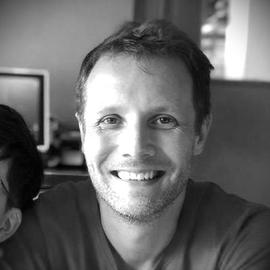
Since his CASA debut in 2010, Adam has risen to the rank of Professor of Urban Analytics. Despite a fondness for body art and drum and bass music, he still manages to hold it down on the mapping and modelling front.

Gerry Casey
Principal Research Fellow, UCL & Associate, Arup
Transport modeller and data scientist building city-scale simulations to help governments and cities make better decisions on transport, climate, and equity.
Esra Suel
Associate Professor, UZH & UCL
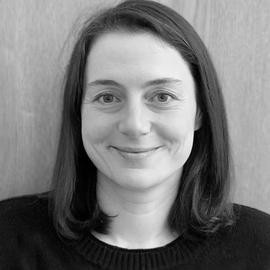
Esra is an Associate Professor of Urban Analytics at the University of Zurich and UCL CASA. Her research uses computational methods to study mobility, housing, demographic change, and energy transitions in cities, focusing on inequalities.